
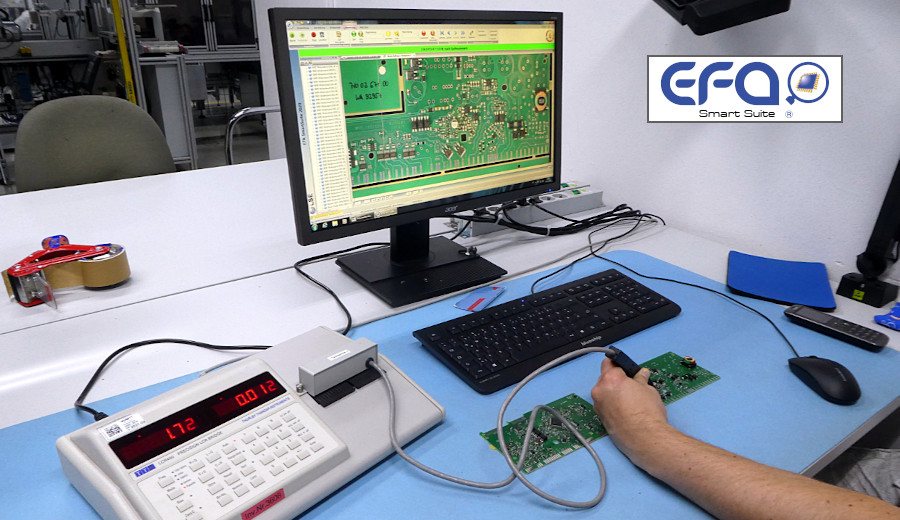
First article inspection – more than just optical inspection
A smart inspection solution with greater inspection depth and time savings
First article inspections are an important step in assembly production. In addition to the usual optical inspection of the components, their physical parameters are increasingly being measured and the component markings checked against up-to-date component information from the internet. LEBERT Software Engineering offers a suitable inspection system that integrates seamlessly into a company's own established processes.
published in all-electronics on 9 June 2020
EMS providers constantly face up to dynamic customer requirements. Changing products, ever-new component requirements and variable batch sizes place constantly growing demands on their own production processes. The quality of the products manufactured is ensured by a large number of checks. The rule is: the later an error is detected during assembly production, the greater the effort needed to eliminate it. To save time and money, the obvious choice is a first article inspection that is as comprehensive as possible, as the EFA Inspection solution makes possible. This means not only purely optical checks, but also checking the data and verifying the physical component values.
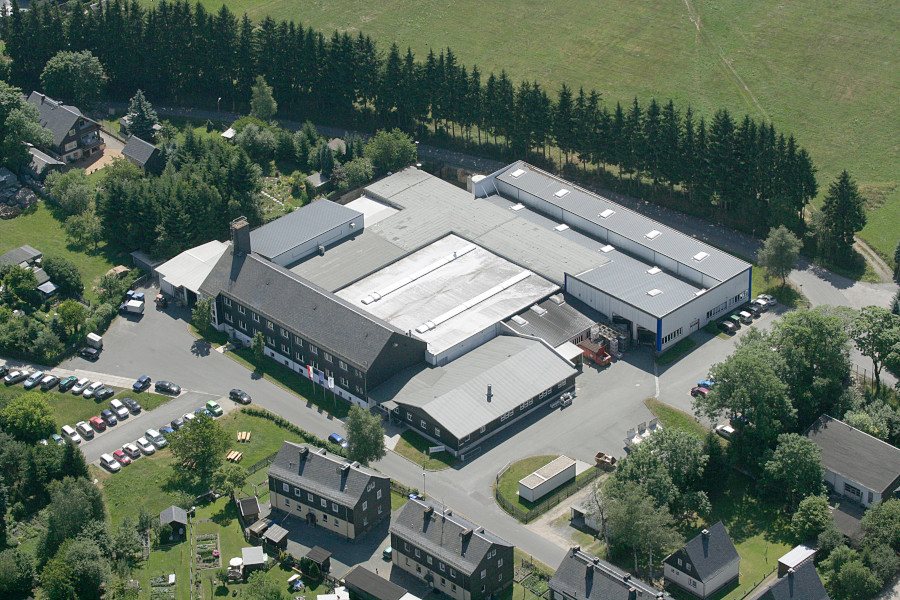
EMS provider Sumida Lehesten
To be able to maintain the high quality of its products in the future, even under changing conditions, a company's own production processes are repeatedly put to the test. At Sumida Lehesten in Thuringia (Figure 1), too, continuous improvement management is part of its high standard of quality. Founded in 1965, the company produces high-quality products for consumer, automotive and industrial electronics applications at its Lehesten site, with around 300 employees on 5 SMT lines. As a full-service provider, Sumida Lehesten relies on long-standing customer relationships. In addition to quality and environmental certification, the company has also held IATF 16949 certification since 2004. To meet flexible, customer-specific requirements at the highest level of quality, all production processes are geared towards zero-defect production. In 2018, Sumida Lehesten was looking for suitable solutions to optimise its first-run inspection process.
First article inspection requires great inspection depth
Because of the great flexibility that characterises first article inspection as a whole, it is often carried out manually. Automatic systems focus solely on optical inspection and, moreover, cannot inspect without time-consuming programming. The EFA Inspection solution, by contrast, combines flexibility and time savings.
To achieve the required inspection depth, Sumida Lehesten compares the component data in its own BoM with the customer's and combines LCR measurement with optical inspection in the same inspection step. As many components have no markings, only an electrical measurement can confirm that the component is correct.
At Sumida Lehesten, too, the established inspection process required a high level of concentration from employees. A lot of time was spent searching for the components on the board and in the documents. The individual inspection steps were documented by hand. The measured values themselves were not recorded. Whether a measured value was within the expected tolerance range had to be checked by calculation. The inspection itself was difficult to trace.
To improve this process, Sumida Lehesten was looking for an effective inspection solution that combines optical inspection, LCR measurement and data checking. LEBERT Software Engineering offers exactly such a system. After a short evaluation phase, the EFA Inspection system was introduced at the end of 2018.
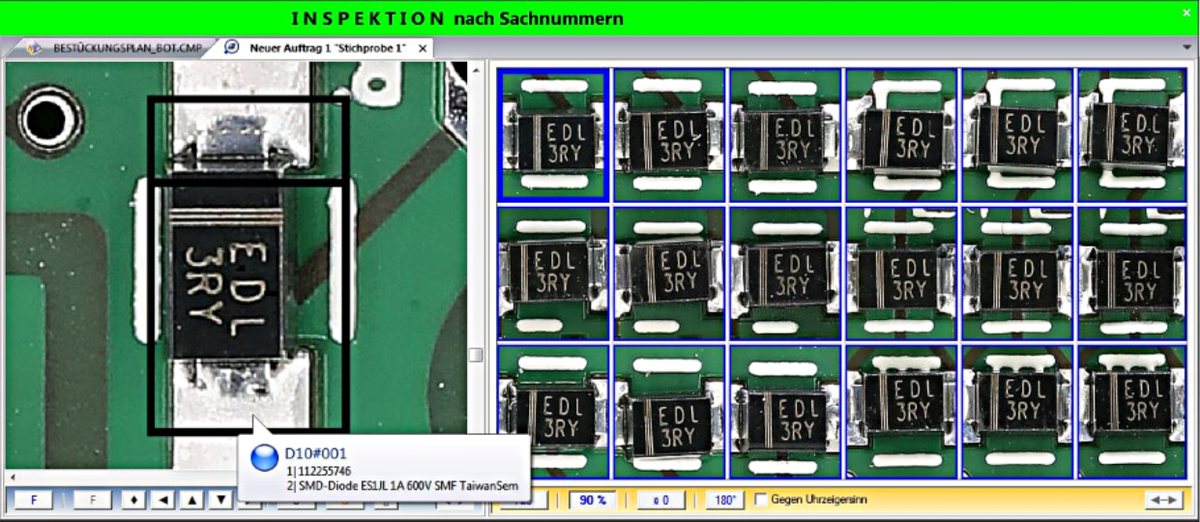
Augmented reality inspection
The EFA Inspection system can be adapted flexibly to the respective application. The type of inspection sequence depends solely on the current process. For first article inspection, for example, all components to be inspected can be displayed grouped by part number. The presence of all components of each part number can thus be seen at a glance. (Figure 2) Polarity can also be checked at a glance, as EFA Inspection displays the individual images in the overview rotated to zero degrees. This means that all polarity markings in the component overview must be in the same position. Important component information, such as component values or manufacturer details, is displayed directly on the component concerned. If the customer's data and the company's own BoM are displayed together, this comparison is also possible at a glance.
Integrating LCR measurement
To link optical inspection and LCR measurement, the existing LCR meter was connected to EFA Inspection. The meter is controlled automatically, directly from the software. The measured value is transferred to EFA Inspection, compared with the tolerance range, automatically assessed and documented.
EFA Inspection makes the inspection process much simpler for employees. The program guides them through the inspection and displays the components with the relevant information, grouped by part number. At the same time, the first component of each part number is located for the LCR measurement.
“Working with EFA Inspection saves a considerable amount of time. And we have all the information to hand immediately,” is the verdict of the employees in the test area.
Of course, individual inspection reports can be generated once the inspection is complete.
Seeing every detail at up to 5,000 dpi
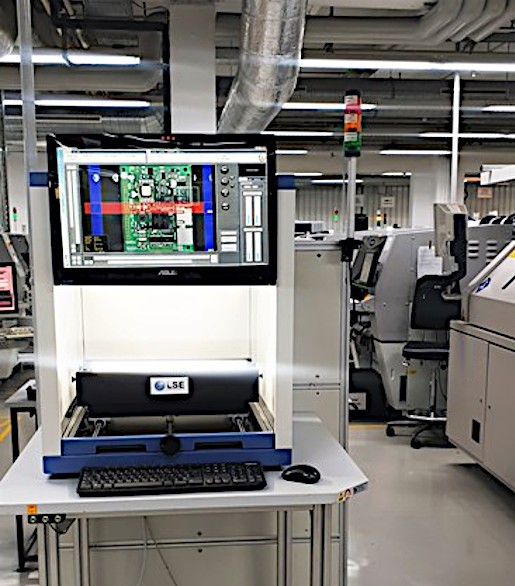
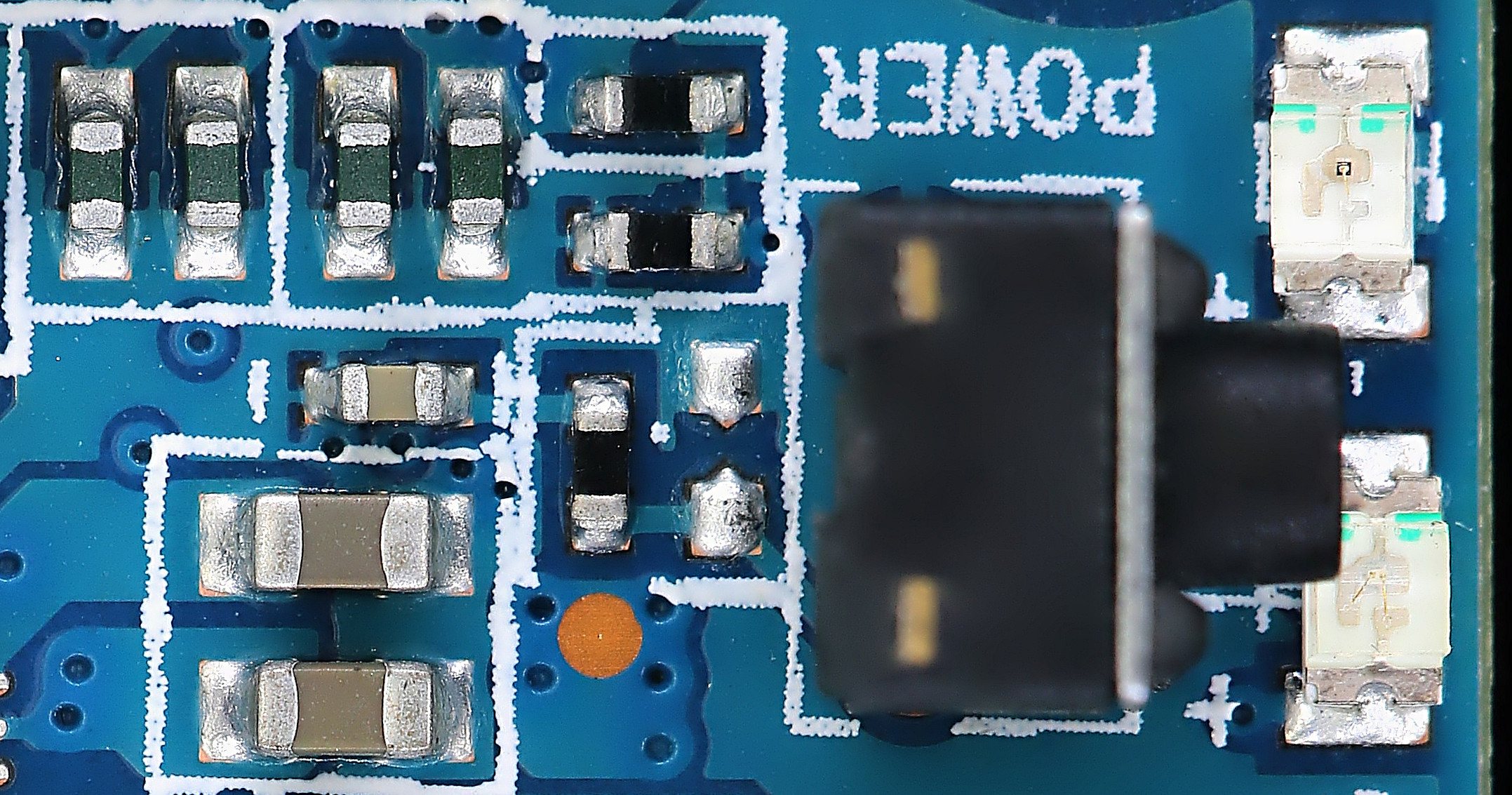
The inspection is based on a high-resolution image of the assembly. To produce it reliably, Sumida Lehesten opted for an EFA Picture unit. (Figure 3) The camera-based imaging system produces microscopic full images of the PCBs. The unit's parameters can be adapted flexibly to new imaging situations. Thanks to individual settings, images with a resolution of up to 5,000 dpi can be produced, depending on requirements. (Figure 4)
To do this, several partial images of the assembly are captured and computed into a full image. The algorithms of the EFA Stitch software, developed specifically for this purpose, take into account both different exposure situations and perspective uncertainties.
A gain for work preparation
Manufacturing Engineering also benefits from the simple data preparation and the ability to link placement data, BoMs and assembly plans very easily. EFA Inspection supports the preparation of first article inspection with automatic processes. For example, the values for the LCR measurement can be taken over automatically from the imported BoMs.
“So far, we have been able to import all the different customer formats into EFA Inspection. Purely digital preparation for production and inspections has thus become much more reliable and offers a whole new view of the customer's product,” confirms Mr Stöhr from Manufacturing Engineering.
Originally purchased with a focus on first article inspection, the solution is now also used, among other things, for fast process release on restarts. Sumida Lehesten is currently also examining the use of further functions of the software solution. Of particular interest is the option of searching online from within EFA on the basis of material numbers or physical component values.
A smart solution established
Sumida Lehesten has benefited from introducing the EFA Inspection system.
“Overall, the processes concerned have improved through significant time savings. In addition, the system reliably detects placement errors and thus contributes to overall process optimisation,” explains Mr Stöhr.
At the same time, the documentation and traceability of the first article inspection process have improved significantly.
To meet the ever-growing demands on the EMS sector with smart software solutions, LEBERT Software Engineering began developing EFA Inspection for fast first article inspection in 2009. Over the last 10 years, EFA Inspection has grown into an entire suite of smart software solutions. From the outset, development has drawn on the experience of a large number of EMS providers. The EMS software EFA SmartSuite thus offers efficient solutions for many process steps, from quotation through work preparation to production. In particular, this repeatedly makes it easier to carry out processes that combine human know-how with the automation of the computer – saving people a significant amount of time – very much in the spirit of Industry 4.0.