
Evaluating a first article inspection system
When theory and practice lead to a return on investment of less than six months
First article inspection is an integral part of electronics manufacturing. An error that goes undetected at the start of the production process usually multiplies across the entire production batch. Mair Elektronik used a detailed market analysis to evaluate the best inspection system for first articles. The clear result led to a significantly improved process step that is well accepted by employees.
published in productronic 02/2024
One of the most important quality assurance methods in electronics manufacturing is what is known as first article inspection. The first PCB produced is checked manually, in as much detail as possible, for potential defects such as placement errors or reversed polarity. Every incorrect component that is not detected at this point leads to high correction costs later in the production process. However, manually cross-checking the assembly plan, BoM and assembly ties up an enormous amount of time and staff. How can the high staff and time requirements of first article inspection be reduced and the quality and reliability of the inspection be optimised? Mair Elektronik GmbH, a medium-sized company based in Schwaig, had precisely this question examined in a final project.
Aim of the market analysis
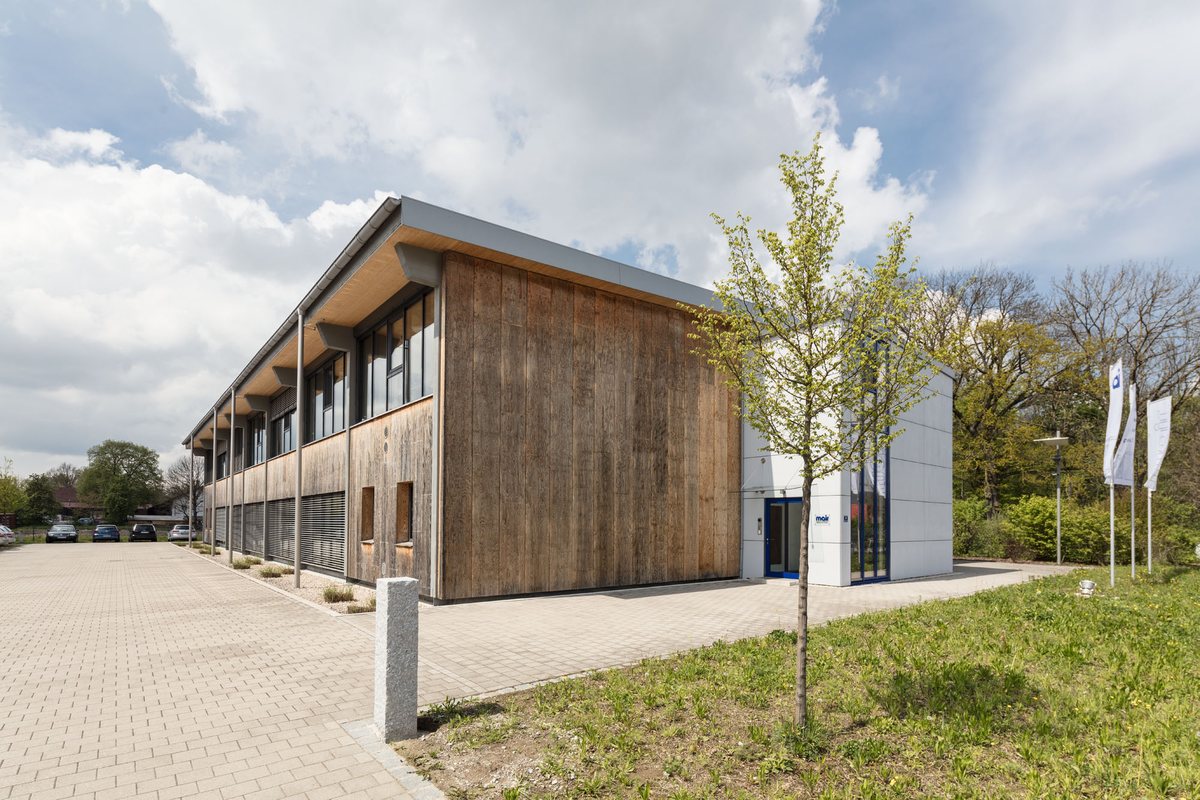
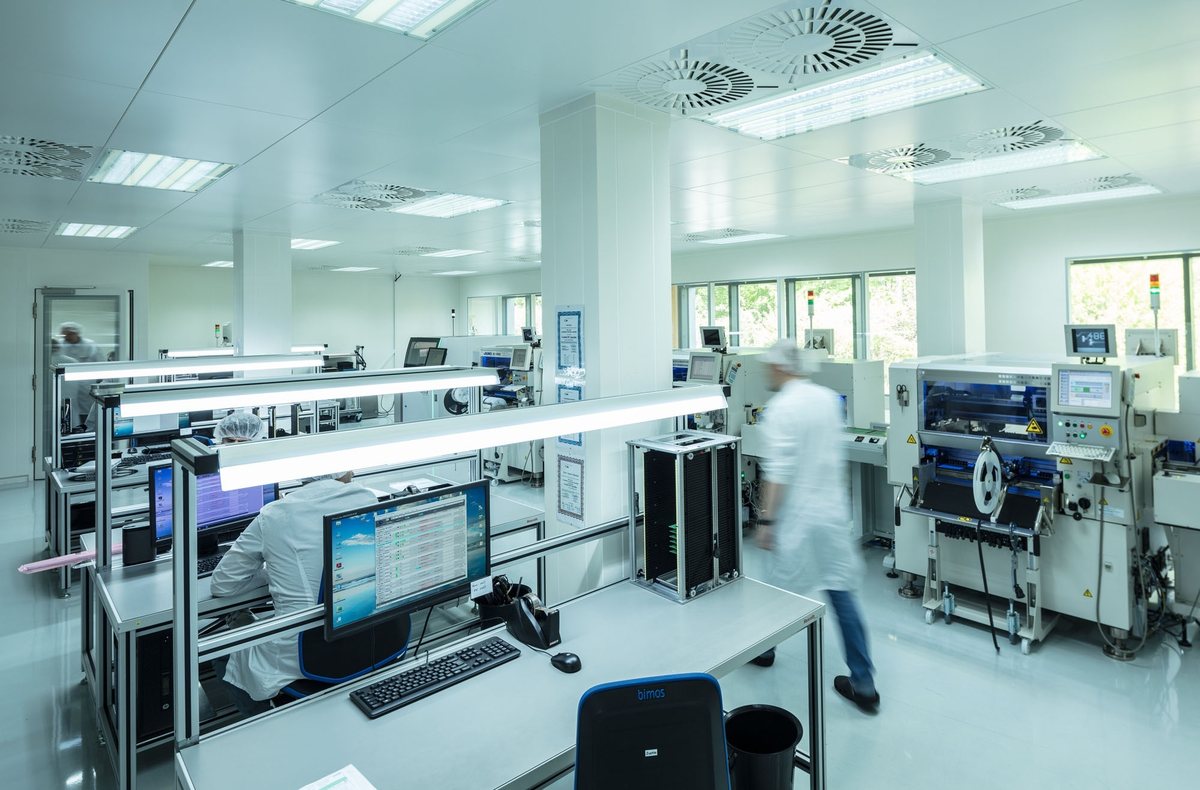
At two sites, Mair Elektronik supports the entire process chain, from process development and “design for manufacturing” consulting to the procurement of electronic and mechanical components and production. Both THT series and complex SMT products are manufactured in the clean room. The wide variety of customers often also means small to medium-sized orders. This results in numerous changeovers and first article inspections.
In the final project of his training as a microtechnologist, Daniel Gemmer addressed the question of how to optimise first article inspection. To this end, he shortlisted a total of three first article systems and tested and compared them against various criteria. The aim was to find an inspection system for first article and small batch inspection that would then also be purchased and introduced.
The new inspection system therefore had to deliver the key benefits of time savings and easier defect identification. It had to provide sufficient image quality to display even 0201 components reliably and clearly. Easy programming was to avoid long training periods. For this, it had to be able to process data in at least the common spreadsheet formats. In addition, the system had to be flexible enough to be used at different process steps.
Theoretical assessment
Each of the three inspection systems was tested with the same test board and the same data. The test board itself measured 200 mm by 120 mm. With 676 different components and mixed assembly, it covered a broad range of requirements. During this test phase, the categories assessed were technical support, user-friendliness, time savings including programming time, and costs. The assessment focused on user-friendliness and time savings. Points were awarded in each category so that the inspection systems could be compared.
Even during the test phase, it became clear that the EFA Inspection system from Lebert Software Engineering in Hanau was ideally suited to meeting Mair Elektronik's specific requirements. On the strength of these convincing results, the inspection system was purchased during the product presentation, even before the final project was submitted.
The assessment of the categories showed that this judgement was correct. The EFA Inspection system achieved by far the highest score – and even the maximum score in each of the categories technical support and time savings.
Smart inspection solution
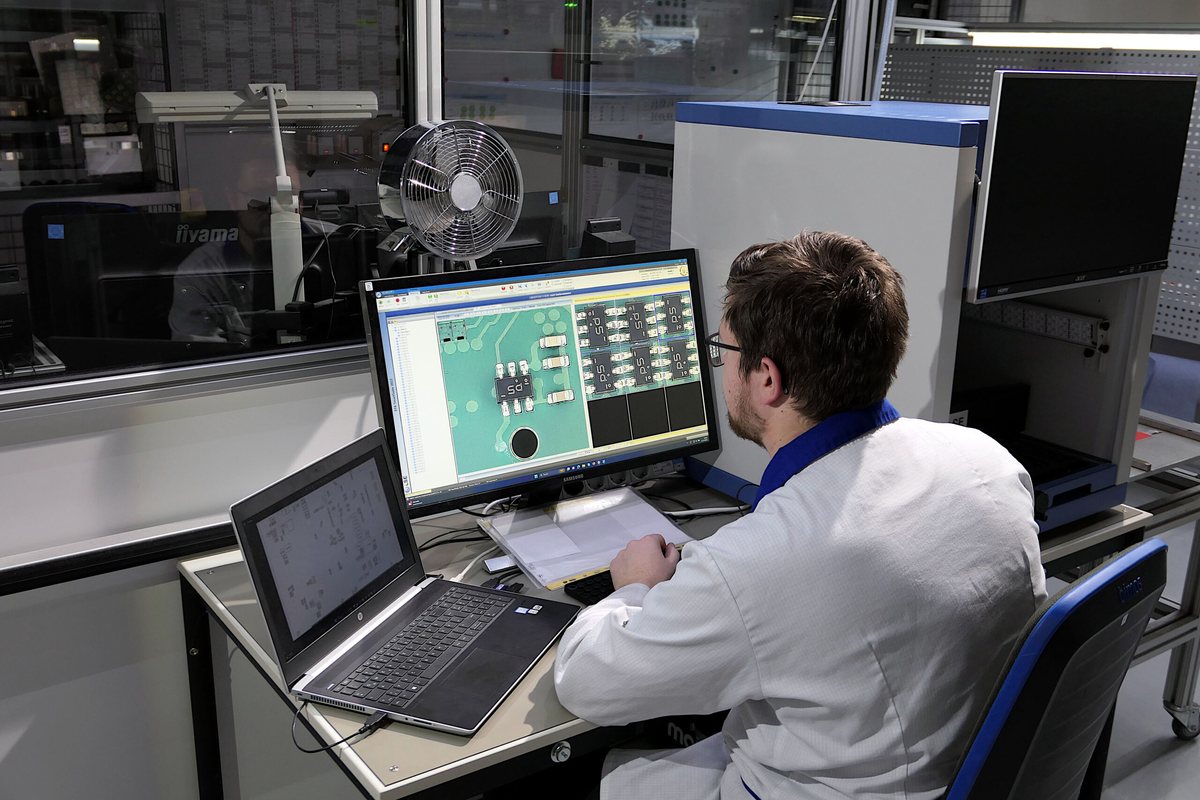
To make first article inspection as comprehensive as possible, EFA Inspection can also cross-check the original customer data in addition to the optical inspection. To do this, both the placement data and the BoMs are imported, and the assembly plan is stored as a reference for component orientation. Thanks to many special functions and automatic processes, setting up an inspection program takes only a few minutes. The actual inspection is then carried out using a photo of the first board.
During the inspection, all components with the same part number are displayed together as a group. The inspector can see immediately whether all components are present and whether all components with the same part number really are identical. Component polarity is just as easy to check. Based on the rotation in the placement data, EFA Inspection rotates the image sections of the components of a part number back to zero degrees. This means that all polarity markings in the overview must be in the same position. In addition, the assembly plan is automatically overlaid on the image of the board in the correct orientation. The customer's orientation details are thus visible directly on the components and must match the polarity markings. Further augmented reality functions can also display important component information, such as component values or manufacturer details, directly on the component concerned. If the customer's data and the company's own BoM are displayed together, this comparison is also possible at a glance.

The inspection is based on a high-resolution image of the board, which an EFA Picture unit can produce reliably. Depending on the board size and the lens selected, the board images are available within up to 30 seconds. Lenses can be chosen according to the resolution required and can also be changed by the user. 0201 components are clearly recognisable at a resolution of 1,800 dpi. The EFA Picture unit can produce full images of a PCB with a resolution of up to 5,000 dpi.
Practice confirms the theoretical assessment
At Mair Elektronik, the savings potential of EFA Inspection was clearly evident during the introduction phase. The very next day after the system was purchased, a first article inspection was carried out with significant time savings. It is remarkable that Mr Gemmer achieved this result without any training, simply by familiarising himself with the system. At the start of the introduction, an average of 60% of the time and 50% of the staff were saved. This was accompanied by a significantly reduced organisational effort. First article inspections no longer have to be scheduled far in advance.
The return on investment (ROI) also confirms the investment made. Even with a rather conservative calculation of the time required, staff costs and maintenance costs, the ROI was less than 6 months.
In his final project, Daniel Gemmer clearly showed that first article inspection could be significantly improved with EFA Inspection. The user-friendly software interface and intuitive operation led to seamless integration into the process flow and high acceptance among employees. First article inspection is no longer as laborious and time-consuming. On the basis of these results, Mair Elektronik has since also equipped its second site in Eisleben with an EFA Inspection system. Integration into further processes, such as spot checks, troubleshooting during rework or final inspection, is also planned.